
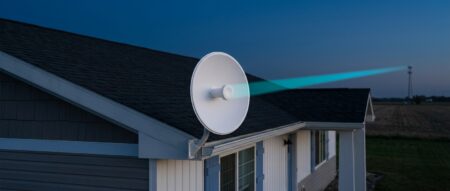
The FCC is considering major updates to 6 GHz unlicensed rules. We just filed formal reply comments, and the changes we’re pushing for could unlock significantly more performance for our customers’ networks.
If you’re running a WISP, managing an enterprise campus, or deploying broadband to underserved communities, you already know how important the 6 GHz band has become. Since the FCC first opened it in 2020, 6 GHz has become the backbone of next-generation fixed wireless and Wi-Fi deployments, with more than 5,000 device models on the market and millions of radios in the field.
Now, the FCC is asking whether the rules need an update. They issued what’s called a Third Further Notice of Proposed Rulemaking (Third FNPRM), and it’s an open invitation to the industry: tell us what’s working, what isn’t, and what you’d like to change.
We took that invitation seriously. Cambium Networks filed formal reply comments on April 21, 2026, laying out six specific recommendations. Here’s what we asked for, why it matters, and how it could directly benefit your network.
1. Let the AFC See What Our Antennas Actually Do
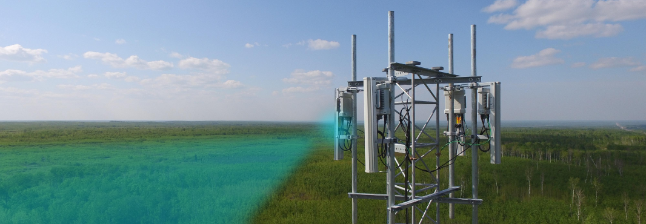
This is our single biggest ask, and we think it’s the most impactful change the FCC could make.
Today, when the Automated Frequency Coordination (AFC) system decides which channels and power levels your radio can use, it assumes every antenna is omnidirectional, radiating equally in all directions, 360 degrees. That’s a reasonable default for consumer Wi-Fi routers. But for a professionally installed Cambium dish antenna with a 7-degree beamwidth? It’s wildly inaccurate.
Our PMP 450v subscriber modules, for example, use dish antennas with 22–24 dBi of gain concentrated into a narrow 7-degree beam, with a front-to-back ratio exceeding 30 dB. That means the signal behind the antenna is 1,000 times weaker than the signal in the main beam direction. But the AFC doesn’t know that. It treats our focused dish the same as a lightbulb throwing light everywhere.
The result? Spectrum gets denied or the power reduced at locations where there’s absolutely no interference risk to incumbent microwave users. Coverage holes that don’t need to exist. Capacity left on the table.
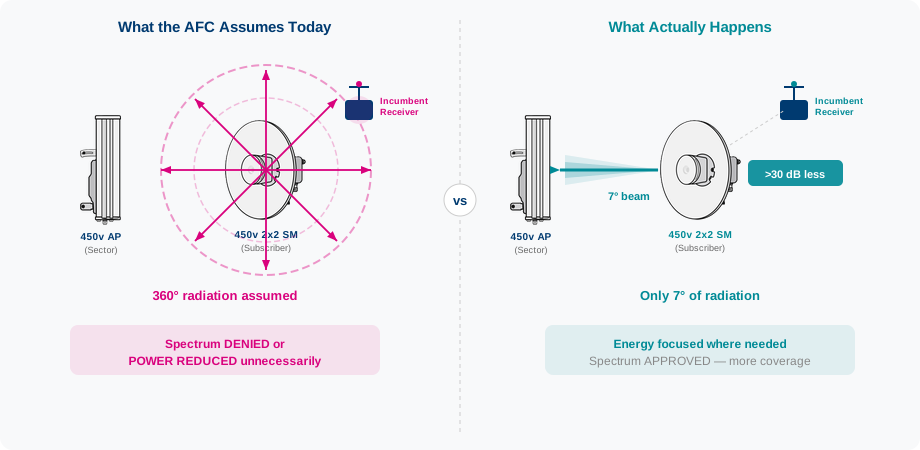
We’re asking the FCC to let AFC systems consider the actual antenna pattern when the device is professionally installed and the installer reports the antenna model, azimuth, tilt, and location. WISPA has been championing this idea since 2019, and Federated Wireless (one of the AFC operators) is actively developing the technical framework. We’re working alongside them in the Wireless Innovation Forum (WInnForum) to make this happen.
What this means for you: More approved channels and higher allowed power at locations that are currently restricted, especially tower sites near incumbent microwave paths. Better coverage. Fewer “AFC denied” headaches. And no new hardware needed; it’s a software update to the AFC system.
2. More Power for Point-to-Point Backhaul
If you’re running a WISP, your access points are only as good as the backhaul feeding them. In rural areas, fiber often isn’t an option, so wireless PTP links in 6 GHz are the lifeline.
Right now, the maximum EIRP in the 6 GHz standard-power bands (U-NII-5 and U-NII-7) is 36 dBm. That works for moderate distances, but it doesn’t give you the fade margin you need for reliable multi-mile links, especially in challenging weather. Meanwhile, the older U-NII-1 band at 5 GHz already allows PTP links to use higher power with antenna gain, so we’re asking the FCC to simply harmonize the rules.
The proposal: cap conducted power at 30 dBm, allow up to 23 dBi of antenna gain before reduction. That’s not a radical change. It’s alignment with what the FCC already permits at 5 GHz. And because these are narrow-beam PTP dishes (7–10 degrees) managed by the AFC, the interference risk to incumbents is minimal.
What this means for you: Longer, more reliable backhaul links. Fewer relay hops. Better use of 6 GHz’s 850 MHz of available spectrum for both access and backhaul on the same platform.
3. Smarter Building Entry Loss Means Stronger Indoor Wi-Fi
The FCC proposed allowing AFC systems to account for Building Entry Loss (BEL), which accounts for the fact that signals from indoor access points get attenuated by walls and windows before reaching the outside world. We support this, but we think the FCC’s proposed value of 6 dB is too conservative.
Through the WInnForum, industry stakeholders agreed on a value of 20.5 dB, based on the 50th percentile of a representative mix of building types. That’s not aggressive; half of all buildings provide even more attenuation than that. We’re urging the FCC to adopt the WInnForum consensus value, along with the corresponding propagation model parameters that make it work as a system.
This matters for our enterprise Wi-Fi portfolio too. Our Wi-Fi 7 access points (X7-35X, X7-55X) and Wi-Fi 6E models (XE3-4, XE5-8, XE3-4TN) all operate in the 6 GHz band. As composite indoor/standard-power certification becomes available, a reasonable BEL means these access points can deliver stronger indoor signals without any increased interference risk outdoors.
What this means for you: Better indoor coverage and throughput from Wi-Fi 6E and Wi-Fi 7 access points. Fewer dead spots in enterprise deployments. The same protection for incumbents, because the walls do the work.
4. Fix the “Chicken-and-Egg” Problem for New Installs
Here’s a scenario every WISP installer knows: you climb the pole, mount the subscriber module, power it up… and it can’t transmit. Why? Because it needs AFC authorization first, and it can’t reach the AFC because it doesn’t have an internet connection yet. The wireless link you’re installing is the internet connection.
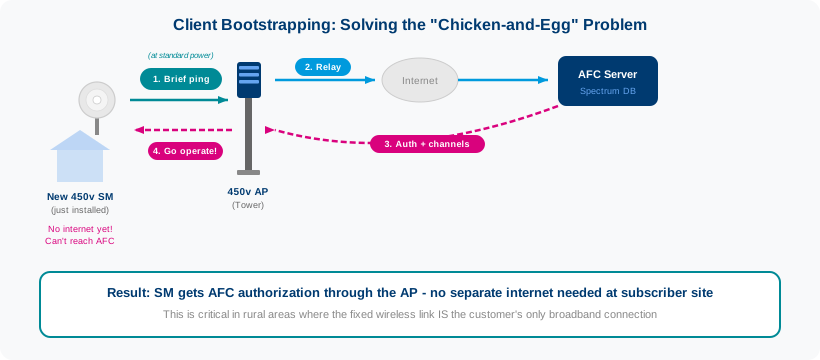
We’re asking the FCC to adopt client bootstrapping rules that let a new subscriber module send a brief initial message to its serving access point (at standard power), which relays the AFC query on its behalf. This is exactly how it works in the 3.5 GHz CBRS band, and it’s proven and safe. The bootstrapping transmission is brief, happens once during installation, and poses no meaningful interference risk.
Without this, installations in rural areas can become needlessly complicated. With it, your tech climbs the pole, mounts the radio, and it just works.
What this means for you: Simpler installations. Faster truck rolls. No workarounds needed in areas where the wireless link is the customer’s only broadband option.
5. Yes, Fix the AFC Models, But Don’t Freeze Everything Else
Some incumbents in the 6 GHz band (utility companies and microwave operators) filed comments citing a Department of Energy study that found the AFC can under-predict interference in certain line-of-sight scenarios. They’re asking the FCC to hit the pause button on any further 6 GHz expansion until the issue is resolved.
We take interference protection seriously. We make licensed microwave products too, and our customers include operators of microwave backhaul links. But the right response is a targeted fix, not a freeze. The DOE study identified a specific issue with how the propagation model handles line-of-sight probability in the microwave main beam. That’s fixable with a software update to the AFC. It doesn’t require rethinking the entire 6 GHz framework.
And here’s the context: since 2020, millions of 6 GHz devices have been deployed. The number of interference reports? Two. That’s a remarkably low rate, and it speaks to the fundamental soundness of the AFC approach. Freezing innovation would hurt the millions of Americans who depend on 6 GHz broadband, especially in rural communities, to address a problem that has a straightforward engineering solution.
We support fixing what the data shows needs fixing. We oppose stopping everything while it gets fixed.
6. LPI on Cruise Ships? Sure, With the Right Definition
The FCC proposed allowing Low Power Indoor access points on cruise ships. Makes sense: thousands of passengers in a floating metal box need more Wi-Fi spectrum. We support it, with the suggestion that the definition should be limited to large vessels (500+ passengers) rather than any boat over 100 tons.
We’re In This Together
Cambium didn’t file these comments in a vacuum. We’re actively working with WISPA, Federated Wireless, the Wi-Fi Alliance, and fellow members of the Wireless Innovation Forum to develop the technical specifications that will make these proposals real. WINNF-TR-0025 for PTP operations, the bootstrapping framework, directional antenna AFC integration. This work is happening now, and we’re at the table.
The 6 GHz band has already been transformative. With these updates, it can do even more: more spectrum approved, more coverage delivered, more communities connected. And all while maintaining the protection that incumbent microwave users need and deserve.
Summary: What We’re Asking the FCC to Do
- Directional antenna support — Let the AFC see the real antenna pattern, not assume omni
- Higher PtP power — Harmonize with U-NII-1 for stronger backhaul links
- 20.5 dB building entry loss — Better indoor Wi-Fi with no extra outdoor risk
- Client bootstrapping — Let new installs get AFC authorization through the serving AP
- Targeted AFC model fixes — Address real issues without freezing progress
- LPI on large cruise ships — More Wi-Fi spectrum where it’s needed
Want to read the full filing? The complete reply comments are available on the FCC ECFS under ET Docket No. 18-295, filed by Cambium Networks, Inc.
Have questions or want to discuss how these changes could affect your network? Reach out to your Cambium sales team. We’d love to hear from you.
Matt Mangriotis is Senior Director, Product Line Management at Cambium Networks, where he leads the fixed wireless broadband portfolio including the PMP 450, Unlicensed PTP and cnWave 5G Fixed platforms. Cambium Networks enables service providers, enterprises, and governments to deliver exceptional digital experiences with compelling economics.