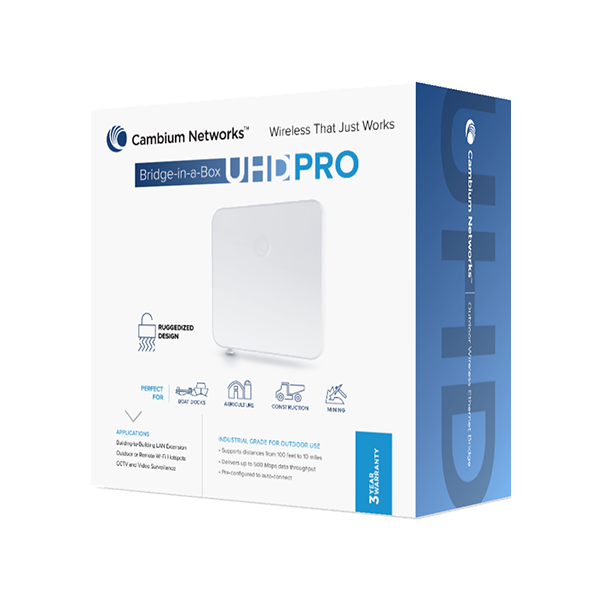
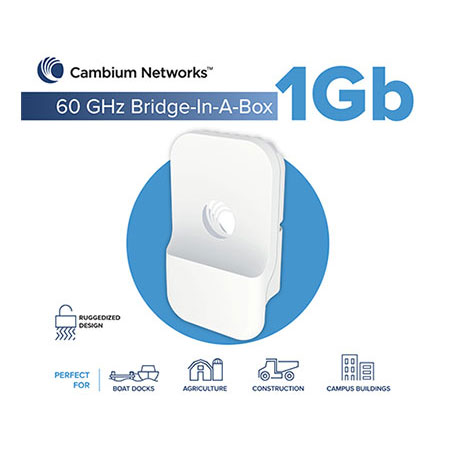
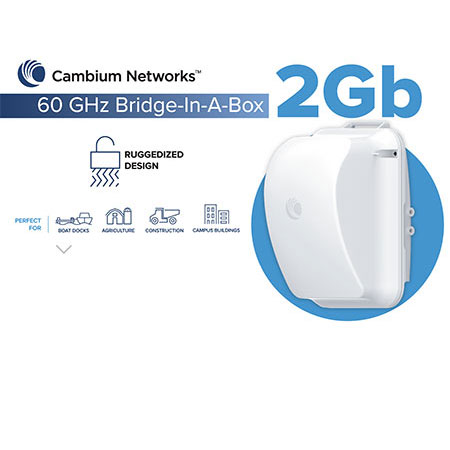
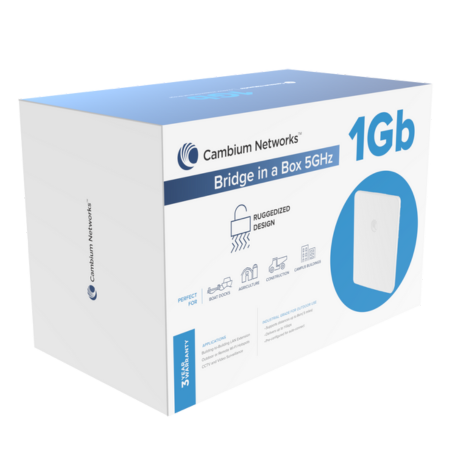
Did you meet the Cambium Networks team at Bett 2026 in London two weeks ago? We showcased our ONE Network solutions for the education market:

  • Network Service Edge (NSE) firewalls at the ISP demarcation point allow schools to ensure a protected environment for their students, staff, guests, and IoT devices. The network is protected from external threats of all types and local devices on the network are assessed for vulnerabilities 24×7. These capabilities work to safeguard the education community in support of KCSIE 2025 statutory guidance
  • cnMatrix™ Ethernet switches built for PoE delivery, segmentation, and operational reliability, keep connectivity predictable as APs, cameras, and IoT endpoints grow
  • Wi-Fi 6E and Wi-Fi 7 Access Points and Wall Plates provides reliable high-density indoor and outdoor connectivity, in the classroom or across campus
  • Fiber XGS-PON ONU enables simple, seamless high-capacity internet service in multiple location types including accommodation blocks and large campuses
  • cnWave™ 60 GHz backhaul provides high-speed connectivity for CCTV backhaul, remote Wi-Fi APs in playgrounds and playing fields and building-to-building links for new construction and temporary classrooms

Schools, Multi-Academy Trusts and Local Education Authorities shared with us that they are looking for fewer tools, fewer blind spots, and faster troubleshooting, all without adding complexity. When cnMaestro™ X manages an end-to-end system that includes the solutions above, IT teams spend less time correlating dashboards and more time preventing issues before they reach classrooms.

Two campus-wide capabilities amplify those outcomes:

  • Integrated AI-based analytics inside cnMaestro X can provide network insights, automate troubleshooting, and support predictive maintenance so IT teams can find issues earlier and resolve them with less guesswork.
  • EasyPass with Azure and Google integration streamlines onboarding and identity-driven access for staff, students, BYOD, and guests, reducing configuration efforts while keeping access consistent.

The best school networks fade into the background by delivering fast, consistent connectivity everywhere learning happens. Students connect and collaborate without friction, teachers run media-rich lessons with confidence, and IT teams operate with clear visibility and control across the entire campus.

Experience the same campus walkthrough we highlighted at Bett by exploring our interactive Education Network Solution Story. Click through each hotspot to see the products and outcomes they enable.

To design the right architecture for your buildings, density, and security needs, contact the Cambium Networks team or your distributor.

Do you remember when memory prices only seemed to move in one direction… down?

Since 2000, DDR (Double Data Rate) memory has followed a familiar pattern: each new generation more than doubled peak data rates, enabling entirely new classes of applications. But while performance kept accelerating, something else was happening more quietly: each generation took longer to arrive than the last.

Today, nearly six years after the introduction of DDR5, we’re standing on the edge of DDR6.

At the same time, DDR5 is finally hitting the mainstream, driven largely by GPUs powering AI data centers. That combination (delayed generational shifts and explosive AI demand) is creating enormous pressure on the memory supply chain. Manufacturers are reallocating capacity to support higher-margin, AI-driven products, and that shift ripples backward through earlier generations.

The numbers tell the story. In 2023, DDR4 and DDR5 hit an all-time low of roughly $2.50 per GB. Less than three years later, prices have climbed to $18 per GB, a dramatic reversal by any measure.

We’ve seen this movie before.

Historically, while the long-term trend for memory cost per GB has been downward, there have been notable peaks, most notably in 2013 and 2018. Those cycles offer a useful model for where we are today, suggesting this shortage could persist for one to two years before stabilizing.

This isn’t just a data center problem. Memory touches virtually every electronic device, and the telecommunications industry is no exception. As costs rise and supply tightens, we should expect higher pricing, sporadic delays, and occasional surges that challenge even well-run supply chains.

At Cambium, we’re taking a proactive approach grounded in three core principles:

  • Planning further ahead by buying earlier and with greater foresight
  • Using less memory through more efficient resource utilization
  • Qualifying more vendors so we can adapt quickly to available supply

No single strategy is sufficient on its own and nothing will prevent increases in costs. However, the combination of all three (planning, efficiency, and flexibility) will help us navigate the shortages ahead and emerge in a better position on the other side.

Memory is getting more expensive again, but a thoughtful strategy will pay significant dividends.

* Chart generated by Gemini using synthesized data from publicly available historical datasets (including John C. McCallum), commercial market tracking summaries (DRAMeXchange/TrendForce), and recent industry news reports.

Networks today are under pressure, from lean IT teams and expanding security threats in enterprise environments to rising spectrum noise and ARPU constraints for WISPs. What both audiences share is a common challenge: doing more with less while the network continues to scale.

That’s where Cambium’s ONE Network approach changes the equation by bringing switching, Wi-Fi, security, SD-WAN, fixed wireless, and fiber into a single, managed solution—all controlled through cnMaestro™. Instead of stitching together multiple vendors and tools, network operators get:

  • One network to deploy and manage
  • More efficient delivery of user experience
  • Enterprise-grade performance at an affordable cost
  • Seamless indoor and outdoor, wired, wireless, and fiber integration

This unified approach is especially powerful when combined with cnMatrix™ switching, which acts as the intelligent foundation of the network. In the coming months, we’ll explore how this architecture plays out for enterprise IT teams and WISPs.

cnMatrix: Built to Simplify Operations at Scale

Whether deployed inside an enterprise campus or at a tower site, cnMatrix switches are designed to reduce manual configuration and human error from Day One.

With Auto Configuration and Policy-Based Automation (PBA):

  • Networks are configured once in the cloud
  • Devices automatically receive the correct VLANs, policies, and power settings
  • Adds, moves, and changes happen without manual port reconfiguration

This zero-touch approach accelerates deployment while ensuring every port is treated consistently: no spreadsheets, no color-coded cables, no guesswork.

Security That Adapts Automatically

cnMatrix improves security without increasing operational burden:

  • Automatic device profiling by type
  • Auto-segmentation for users, IoT, cameras, and infrastructure
  • Policy enforcement that follows the device, not the port

When a device disconnects, policies are automatically cleaned up, reducing risk and simplifying compliance.

Optimized for Wireless, Ready for Anything

cnMatrix switches are purpose-built to support high-performance wireless networks:

  • Right-sized bandwidth and PoE for Wi-Fi 6/6E/7 and fixed wireless radios
  • Optimized automation for Cambium and third-party access points
  • Seamless integration with indoor enterprise deployments and outdoor tower infrastructure

Lower Total Cost Without Compromise

Cambium delivers industry-leading Total Cost of Ownership by combining:

  • Competitive hardware pricing
  • Lower OPEX through simplified management
  • No hidden licensing fees
  • Long product lifecycles and backward compatibility

Add 24/7 live support and flexible management options (cloud, on-prem, mobile app, CLI), and cnMatrix becomes a switching platform that scales without redesign.

ONE Network. One Platform. One Operational Experience.

With cnMatrix as part of the ONE Network architecture, Cambium helps IT teams and operators focus less on managing individual devices—and more on delivering reliable, secure connectivity.

cnMatrix Switch Management Guided Demo

Over the last 10-15 years, the fixed wireless market has changed dramatically. Noise floors rose, spectrum got consumed, competition came from fiber, fixed 5G, and LEO while ARPUs remained stubbornly flat across most regions.

For WISPs, this means that the margin for error is shrinking. Solutions that once worked such as adding capacity reactively, chasing peak speeds, or refreshing platforms every few years, are no longer sustainable. In 2026, success depends more than ever on whether your network can scale economically based on the fundamentals that have remained consistent.

That’s why many WISPs are going back to basics, and why ePMP™ continues to play a central role in long-term WISP networks, with a clear and practical path forward to Evo.

Back to Basics — With a Path Forward

While the landscape for WISPs continues to evolve, the physics and economics that govern network performance have not changed. Networks still succeed or fail based on a few core principles:

  • How predictably they perform under load
  • How well they tolerate interference as noise increases
  • How economically they scale as subscriber density grows
  • How easily they evolve without forcing disruptive upgrades

ePMP was designed around these fundamentals from the start, and the ePMP 4000 Series is fully Evo-ready, enabling WISPs to deploy high-performance connectivity now while maintaining a clear, deliberate path to the converged Evo architecture.

The journey to Evo begins today, but on your terms.

Predictability Matters More Than Peak Speed

Peak throughput makes for great marketing, but WISPs know that real networks are judged during peak hours, under load, and in imperfect RF conditions.

ePMP’s predictable airtime behavior allows operators to:

  • Plan capacity with confidence
  • Offer high-speed competitive service tiers
  • Prevent a small number of subscribers from degrading performance for everyone else

These same predictable behaviors form the foundation for future Evo convergence, allowing performance improvements over time without abandoning what already works.

Interference Is No Longer an Edge Case

Noise floors are now the default operating condition. Co-location, spectrum reuse, and competitive deployments mean WISPs must assume interference will be present from Day One and it is not going away.

ePMP addresses this reality through deterministic scheduling, synchronization, uplink control, and interference-tolerant design. These capabilities enable reliable operation today while ensuring seamless migration to Evo when operators choose to take that step, without disruptive or expensive rebuilds.

Economics Must Scale with the Network

ARPUs are not going up any time soon.

Subscriber costs, truck rolls, recurring fees, and upgrade cycles compound quickly. Platforms that require frequent replacements or monthly service fees quickly erode margins. One-size-fits-all solutions that require a macro-cell mentality for every situation regardless of subscriber density won’t ever pay back their investment.

By keeping subscriber costs aligned with real-world ARPU, eliminating recurring license fees, and supporting incremental upgrades, ePMP allows WISPs to enhance performance today while avoiding large-scale equipment replacement tomorrow.

Evolution Without Disruption Is Now a Requirement

Few WISPs can afford forklift upgrades or forced transitions. Networks must evolve gradually, driven by business needs, not vendor timelines.

With backward compatibility and Evo-ready hardware, ePMP allows operators to:

  • Upgrade performance now
  • Migrate when and where it makes business sense
  • Protect existing capital investments
  • Avoid the cost and disruption of mass replacements

ePMP is the proven production platform for WISPs today and is your first step towards Evo, ensuring a smooth transition to what comes next. The result is a network strategy built for longevity, predictability, and control.

Join us for the Back to Basics Webinar

To explore how WISPs are applying these fundamentals, and how ePMP and Evo fit into a practical upgrade strategy, join one of our upcoming webinars:

In these sessions, we’ll cover:

  • 5 examples of how real-world WISP deployments are navigating rising noise and flat ARPU
  • The latest ePMP features and products focused on predictable performance and scalable economics
  • How ePMP is your first step to Evo, enabling evolution without disruption

👉 Register for the Back to Basics Webinar (APAC timezones) https://go.cambiumnetworks.com/l/428442/2026-01-22/5ck631

👉 Register for the Back to Basics Webinar (ROW timezones) https://go.cambiumnetworks.com/l/428442/2026-01-22/5ck6b4

HOFFMAN ESTATES, Ill., January 14, 2026 — Cambium Networks (NASDAQ: CMBM), a leading global provider of wireless and wired networking solutions, today announced an innovative capability in its Network Service Edge (NSE) security and SD-WAN platform that enables service providers to assign static public IP addresses over WireGuard VPN tunnels — solving the long-standing issue of public IP unavailability over low Earth orbit (LEO) satellite and, 4G and 5G cellular internet connections.

Unlike most solutions that rely on cloud-hosted services, Cambium’s design allows Private Network operators, Managed Service Providers (MSPs), Internet Service Providers (ISPs), and Wireless Internet Service Providers (WISPs) to deploy the NSE in their data centers and deliver services directly to customer sites also equipped with NSE. This architecture provides partners complete control of the traffic path while delivering business-grade performance, SD-WAN intelligence, and next-generation firewall protection at every location.

“A significant number of our customers required a static public IP for remote visibility, secure access, and equipment management, but that simply wasn’t possible before due to CGNAT restrictions.” said Chris Lynch, Director, APC Solutionsin the UK.  “With Cambium NSE, we can now deliver that capability through secure, tunnelled public IPs, bringing business-class connectivity and control to locations operating on satellite or 5G links.”

How It Works

To implement the solution, service providers deploy the NSE as a hub in their data center with a pool of public IPv4 addresses. Each customer site installs the NSE at the edge at their site, from which an encrypted WireGuard tunnel is created back to the hub. Through this tunnel, the customer’s NSE receives a dedicated static public IP address, even when connected behind a LEO satellite or cellular WAN connection.

Traffic is routed through the provider’s data center infrastructure, giving ISPs and MSPs complete visibility and control. At the same time, each spoke-site NSE delivers integrated SD-WAN, next-generation firewall (NGFW), intrusion prevention, content filtering, and QoS features to protect and optimize local networks.

Expanding Connectivity and Capability

The combination of static IP overlays and edge security unlocks powerful use cases for satellite and cellular WAN connected networks:

  • Remote offices and retail sites on LEO satellite or LTE/5G gain stable IPs for VPN, VoIP, and cloud access.
  • IoT and industrial deployments can host sensors and controllers behind secure, public-reachable endpoints.
  • Healthcare, energy, and education networks can ensure consistent remote management and compliance, even over wireless WANs.
  • MSPs and regional ISPs can launch differentiated “Static IP” service tiers with built-in SD-WAN resilience.

Provider-First Architecture

Cambium’s hardware-centric, partner-hosted model ensures providers keep ownership of their customer data and network infrastructure. No Cambium-operated backbone or cloud routing is required. All orchestration and monitoring are handled via Cambium’s cnMaestro™ management platform, providing single-pane visibility across hub and spoke NSE appliances.

“We designed NSE for partners who want to deliver high-value services without handing over customer traffic to a third party,” said Bruce Miller, VP Enterprise Product Management, Cambium Networks. “By combining static IP overlays with SD-WAN and security at every site, our partners can deliver true enterprise-grade connectivity over LEO Satellite, 4G or 5G WAN connections.”

About Cambium Networks

Cambium Networks enables service providers, enterprises, industrial organizations, and governments to deliver exceptional digital experiences, and device connectivity, with compelling economics. Our ONE Network platform simplifies management of Cambium Networks’ wired and wireless broadband and network edge technologies. Our customers can focus more resources on managing their business rather than the network. We make connectivity that just works.

For more information, visit www.cambiumnetworks.com.

Trust doesn’t come from a badge or a checkbox, it comes from the work done every day behind the scenes. At Cambium Networks, our customers rely on cnMaestro to manage mission-critical wireless networks with confidence, visibility, and control. That responsibility demands more than innovation; it demands rigor. 

That’s why we’re proud to share that cnMaestro has remained SOC 2 Type II compliant continuously since 2023, successfully sustaining compliance through 2024 and into 2025. This milestone reflects not a point-in-time achievement, but a long-term commitment to security, reliability, and operational excellence. 

Achieving and sustaining SOC 2 Type II compliance was never the responsibility of a single team, nor was it a compliance exercise. It required close collaboration across cnMaestro Engineering, IT, HR, Finance, and Legal, working together across multiple enterprise business processes. Engineering ownership was foundational with security, reliability, and operational control infused directly into the cnMaestro platform and development practices. Equally important were employee lifecycle management, vendor oversight, and contractual governance;thus SOC 2 Type II demanded a coordinated, organization-wide effort. 

The Work Behind Achieving SOC 2 Type II 

SOC 2 Type II is not a one-time exercise or a documentation only effort. It is a rigorous, independent assessment established by the American Institute of Certified Public Accountants (AICPA) that evaluates how an organization designs and operates its controls over time. 

While SOC 2 Type I validates that controls are properly designed at a specific point in time, SOC 2 Type II requires sustained, real-world execution, typically over a six- to twelve-month audit period. Controls must be followed consistently, monitored continuously, and improved as systems, teams, and customer needs evolve. 

For the cnMaestro development and SecOps teams, achieving SOC 2 Type II in 2023 meant embedding security and operational discipline into everyday workflows, automating these controls, and not preparing for an audit window, but fundamentally changing how we operate. This includes secure coding practices, security checks integrated into CI/CD pipelines, peer code reviews, ethical hacking, automated testing, shift-left mentality in both security and quality, and doubling down on cloud-native and infrastructure-as-code best practices. 

Just as importantly, this effort extended well beyond the cnMaestro platform itself. IT, HR, Finance, and Legal teams worked alongside engineering and operations to ensure that enterprise business processes aligned with SOC 2 requirements. This included access provisioning and deprovisioning, employee onboarding and offboarding, vendor and contract management, financial controls, incident response coordination, and policy governance. 

SOC 2 Type II evaluates controls across five Trust Service Criteria: 

  • Security – Protection against unauthorized access 
  • Availability – System reliability and resilience 
  • Processing Integrity – Systems operating as intended 
  • Confidentiality – Protection of sensitive information 
  • Privacy – Responsible handling of personal data 

Meeting these criteria required consistent execution, evidence-based validation, and a culture of accountability across teams, day in and day out. 

What This Means for cnMaestro Customers 

For customers using cnMaestro, multi-year SOC 2 Type II compliance delivers meaningful, real-world benefits: 

  • Confidence that security and availability controls are continuously enforced 
  • Reduced friction during vendor risk assessments and compliance reviews 
  • Operational reliability supported by disciplined change and incident management 
  • Enterprise readiness for regulated industries and service providers 

Whether you manage a small deployment or a globally distributed wireless network, cnMaestro is designed and operated to meet the expectations of organizations that take security seriously. 

Sustaining Compliance Over Multiple Years Requires Even More Discipline 

Achieving SOC 2 Type II compliance in 2023 was a significant milestone. Sustaining it through 2024 and 2025 required even greater discipline. 

As cnMaestro evolved, with new features, scale, and customer demands, our teams had to continuously demonstrate that controls were operating effectively in real-world conditions. This meant treating security and compliance not as an annual audit exercise, but as part of how Cambium Networks runs its business. 

Key elements of this sustained approach includes: 

Security by Design 

  • Strong identity and access management 
  • Least-privilege access across systems 
  • Secure cloud-native configuration standards enforced by code across environments 

Operational Rigor 

  • Formal change-management processes 
  • Clear isolation between development, testing, and production 
  • Documented and automated approvals, testing, and rollback procedures 

Continuous Monitoring and Response 

  • Centralized logging and alerting 
  • Proactive, synthetic monitoring for security and availability issues 
  • Timely investigation and remediation of events 

People, Process, and Accountability 

  • Role-based access aligned with job responsibilities 
  • Mandatory security awareness training 
  • Consistent onboarding and offboarding controls 

Continuously Evolving 

  • Security practices adapting to evolving threat landscape 
  • Ongoing investments in automation, training and tooling 
  • Responsibly adopting new technologies to improve availability and security  

Independent Validation 

  • Ongoing evidence collection throughout each audit period 
  • Testing by an independent third-party auditor 
  • Proof that controls work in practice and not just on paper 

This was a true cross-functional effort, requiring sustained coordination across cnMaestro engineering, IT operations, HR, Finance, and Legal teams. Each group played a critical role in demonstrating that security and compliance are embedded across the enterprise and not siloed within a single function. 

It wasn’t glamorous work, and it wasn’t confined to a single audit cycle, but it was essential. 

Security Is a Long-Term Commitment 

SOC 2 Type II certification is not a destination, it’s a baseline. Remaining compliant from 2023 through 2025 reflects how Cambium Networks approaches trust, through repeatable processes, consistent execution, and continuous improvement. 

As cnMaestro continues to evolve, our commitment to security and operational excellence will evolve with it, that is guided by best practices, independent validation, and the needs of our customers. 

Learn More About cnMaestro 

cnMaestro offers a cloud-based, single-pane-of-glass approach to managing Cambium Networks’ wireless infrastructure, providing centralized visibility, control, and scalability across devices and sites. 

To learn more, explore: 

As we begin a new year, I am focusing on one of Cambium Networks’ core values—service. Service is about more than products or performance metrics; it’s about how we interact with people, how we impact them and ultimately their view of us.

A Commitment That Extends Beyond Business

While our technology has always been about connecting people and things to facilitate ideas and opportunities, we have a responsibility to help in times of need. Whether restoring communication after a hurricane, supporting rescue operations, or providing connectivity to displaced families after a disaster, we’ve seen firsthand how flexible and reliable networks enable coordination, and give comfort and hope.

For many years, we’ve worked with Disaster Tech Lab (DTL), whose volunteers bring expertise and support to places where communication infrastructure has been lost. Together, we’ve supported missions to:

  • Provide communications infrastructure across Texas following July flooding and in Cebu, the Philippines after October earthquakes and November typhoons, helping families and relief teams reconnect.
  • Enable communication for refugee communities in Greece, supporting aid coordination and humanitarian response, and in Reni, Ukraine as part of ongoing deployment.
  • Train and equip first responders and volunteers through workshops—most recently, a session with more than 75 participants, including representatives from public and private sector organizations.

At the first responders’ workshop, our team demonstrated how Cambium’s ePMP™ fixed wireless access, PTP backhaul, Wi-Fi access points, and cnMatrix™ ethernet switch solutions can be deployed in minutes to create stable, high-capacity networks in some of the most demanding field environments in the world.

Additionally, our newly announced ability to integrate easy visibility of Starlink status using the Network Security Edge SD-WAN was of high interest to many of the participants, as they use Starlink as the core backhaul method for many critical service needs during disaster events throughout the world.

Connectivity in Action

On six continents, countless groups—from operators to volunteers—use Cambium technology to bring communication back online when everything else goes dark.

In the aftermath of wildfires, floods, and earthquakes, Cambium technology has been deployed to restore networks in record time—often hours, not days. Our ruggedized infrastructure and simple management platforms allow responders to focus on what matters most: helping people in need.

Looking Ahead

As we enter 2026, our focus remains on developing technologies that can be rapidly deployed, securely managed, and economically operated. Our commitment to communities, customers, and partners remains unwavering.

Every connection we enable brings people closer to safety, information, and one another. That’s the real power of connectivity—and the foundation of Cambium’s mission.

We value your partnership and the trust you place in us to keep your networks strong, wherever you serve. All of us at Cambium Networks wish you a happy and prosperous 2026 filled with connection, purpose, and hope.

– Morgan Kurk, President and CEO, Cambium Networks

HOFFMAN ESTATES, IL, December 18, 2025 – Cambium Networks Corporation (“Cambium Networks”, “Cambium” or the “Company”) (NASDAQ: CMBM), a leading global provider of networking solutions, announced today that on December 12, 2025, the Company received a partial compliance letter (“Partial Compliance Letter”) from the Nasdaq Hearings Panel (the “Hearings Panel”) confirming that the Company is in compliance with the Nasdaq Listing Rule 5450(a)(1) (the “Minimum Bid Price Rule”), although it remains non-compliant with the Nasdaq Listing Rule 5250(c)(1) (the “Periodic Filing Rule”). The Hearings Panel also confirmed that it will maintain jurisdiction over the Company until April 8, 2026.

However, per Nasdaq Listing Rule 5815(d)(4)(B), the Company will be subject to a mandatory panel monitor through December 12, 2026. If, within that one-year monitoring period, the Nasdaq staff (the “Staff”) finds the Company again out of compliance with the Minimum Bid Price Rule, the Staff will issue a delist determination letter, at that time, leaving the Company with an opportunity to request a new hearing to address the delisting.

Appointment of Interim Chief Financial Officer

In addition, Cambium Networks announced today that it has appointed Mitchell Cohen, as Interim Chief Financial Officer and principal financial officer, effective immediately. As a result of the appointment of Mr. Cohen, John Waldron will immediately step down as acting chief financial officer and principal financial officer. Mr. Waldron will remain with the Company, serving as a senior financial advisor.

Mr. Cohen has extensive public company, private equity, and high-growth/startup financial organization leadership experience spanning various industries, with experience driving transformational financial performance, delivering increases in shareholder value, and leading complex corporate transactions, including acquisitions and divestitures, debt financing, restructuring, and liquidity management. He is adept at stepping into challenging environments to stabilize operations, restore confidence, and accelerate performance improvements. He has provided chief financial officer and consultant services to companies since 2018 and acted as interim chief financial officer to a variety of companies since 2022, serving in such capacity for Cerence, Redbox Entertainment, Blue Apron and Cytodyn. He holds a Bachelor of Arts, Accounting & Economics from Queens College.

About Cambium Networks

Cambium Networks enables service providers, enterprises, industrial organizations, and governments to deliver exceptional digital experiences, and device connectivity, with compelling economics. Our ONE Network platform simplifies management of Cambium Networks’ wired and wireless broadband and network edge technologies. Our customers can focus more resources on managing their business rather than the network. We make connectivity that just works.

Forward-Looking Statements

This press release contains forward-looking statements, including, but not limited to statements relating to the Company’s ability to maintain compliance with the Nasdaq continued listing standards, as well as words such as “expects,” “anticipates,” “intends,” “plans,” “believes,” “estimates,” “seeks,” “assumes,” “may,” “should,” “could,” “would,” and variations of such words and similar expressions are intended to identify such forward-looking statements. These forward-looking statements are based upon the Company’s current assumptions, beliefs, and expectations. Forward-looking statements are subject to the occurrence of many events outside of the Company’s control. Actual results and the timing of events may differ materially from those contemplated by such forward-looking statements due to numerous factors that involve substantial known and unknown risks and uncertainties. These risks and uncertainties include, among other things, the Company’s ability to return to and maintain compliance with Nasdaq continued listing standards and whether Nasdaq will grant the Company any relief from delisting. Forward-looking statements should be considered in light of these risks and uncertainties. Investors and others are cautioned not to place undue reliance on forward-looking statements. All forward-looking statements contained herein speak only as of the date hereof. The Company assumes no obligation and does not intend to update these forward-looking statements, except as required by law.

###

Contacts:
Investor Relations
Cambium Networks
investors@cambiumnetworks.com

Contact