
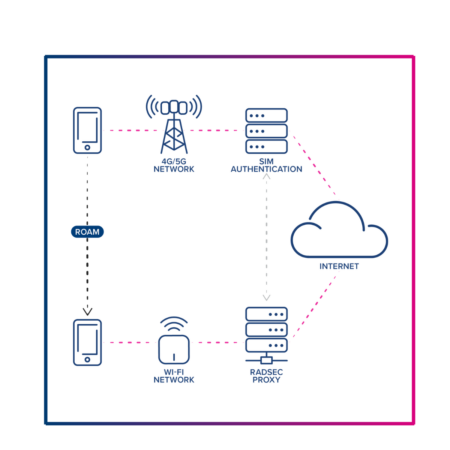
Mobile data demand continues to grow at an unprecedented pace. At the same time, expanding traditional cellular infrastructure is becoming more expensive and increasingly difficult to scale. As carriers look for smarter ways to improve coverage and reduce congestion, Wi-Fi offload is emerging as a practical and profitable solution.
For Managed Service Providers (MSPs) and Wireless Internet Service Providers (WISPs), this shift creates a significant opportunity: monetize existing Wi-Fi and broadband infrastructure while delivering better mobile experiences.
What Is Wi-Fi Offload?
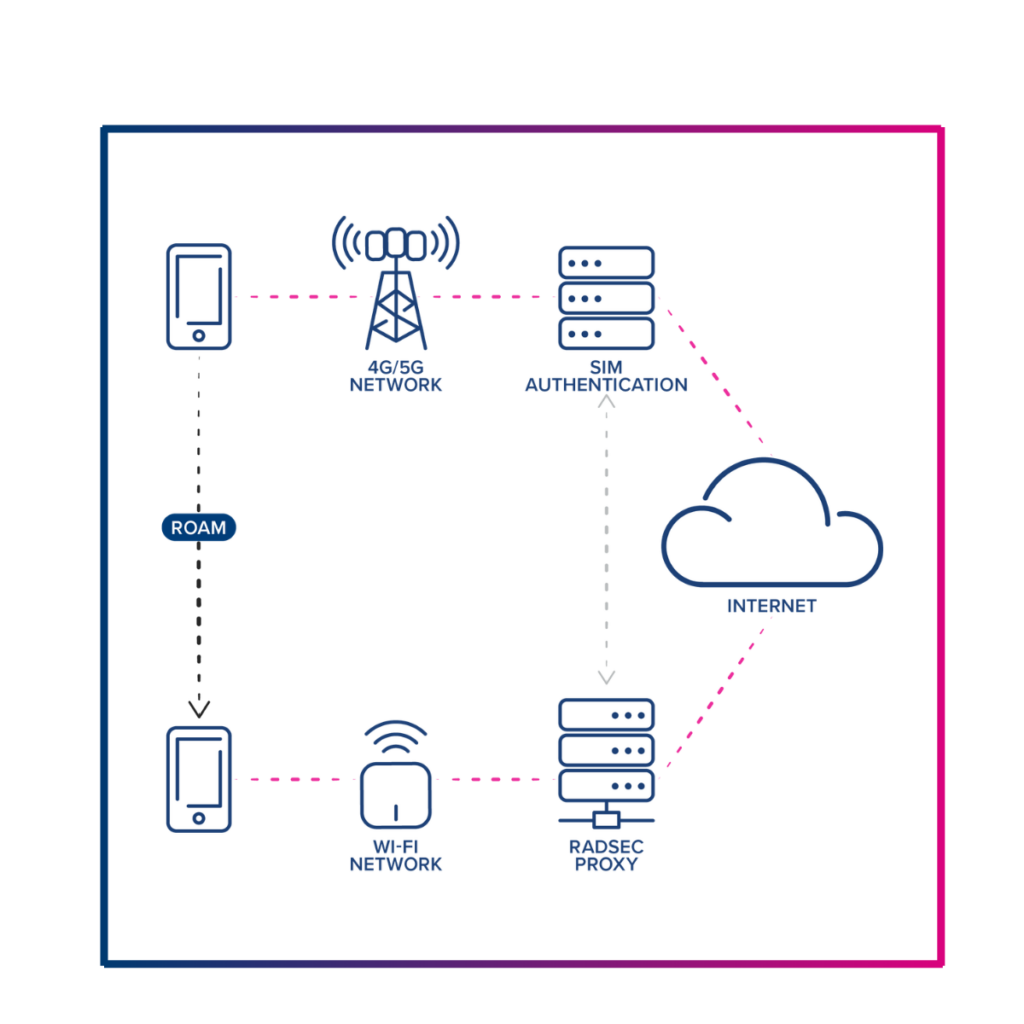
Wi-Fi offload enables mobile devices to seamlessly transition from cellular networks to trusted Wi-Fi infrastructure using technologies like Passpoint and OpenRoaming.
To the user, the experience feels automatic. Devices connect securely without manual logins or interruptions. Behind the scenes, carriers are shifting traffic from overloaded mobile networks onto carrier-grade Wi-Fi infrastructure.
The result:
- Better coverage
- Reduced cellular congestion
- Improved user experiences
- Lower infrastructure costs for carriers
For MSPs and WISPs, it means existing networks can now participate in the broader mobile ecosystem.
The Business Model Many Providers Miss
One of the biggest misconceptions about Wi-Fi offload is assuming revenue comes directly from end users. In reality, carriers fund offload initiatives because they benefit from reduced mobile network strain.
Most MSPs and WISPs participate through ecosystem partners such as:
- Offload aggregators
- OpenRoaming brokers
- Managed service platforms
- Technology integration providers
Companies like WayFi and XNET already maintain carrier relationships and simplify onboarding into the offload ecosystem. This allows providers to focus on network performance rather than negotiating directly with mobile operators.
Where Wi-Fi Offload Delivers the Most Value
Not every deployment generates meaningful revenue. The strongest opportunities typically exist in environments with:
- High user density
- Heavy mobile data usage
- Weak or congested cellular coverage
- Long user dwell times
High-value deployment locations include:
- Transportation hubs
- Campuses and commercial buildings
- Shopping malls and retail centers
- Hospitality venues and restaurants
- Hotels and multi-dwelling units (MDUs)
These environments create ideal conditions for sustained mobile traffic offload.
Operational Simplicity Matters
Carrier-grade Wi-Fi offload requires more than adding access points. Providers need secure onboarding, centralized policy control, seamless roaming, and consistent application performance.
This is where Cambium Networks’ ONE Network architecture helps simplify deployment and operations. Cambium integrates Wi-Fi, switching, SD-WAN, security, fixed wireless, and fiber management into a unified platform managed through cnMaestro™.
Key advantages include:
- Integrated Passpoint and OpenRoaming configuration
- Centralized multi-site management
- Application-aware traffic visibility and control
- Scalable Wi-Fi performance for high-density environments
- Reduced operational complexity and lower OpEx
For MSPs and WISPs, operational efficiency directly impacts profitability and scalability.
Why MSPs and WISPs Are Positioned to Win
Most MSPs and WISPs already own the foundational assets needed for Wi-Fi offload:
- Broadband backhaul
- Indoor and outdoor Wi-Fi infrastructure
- Distributed managed network environments
- Existing customer relationships
This makes Wi-Fi offload less about building new infrastructure and more about unlocking new value from networks already in place.
As mobile carriers continue to look for scalable alternatives to costly macro network expansion, providers that align with the offload ecosystem today will be better positioned for future growth.
Wi-Fi is no longer just a convenience layer. It is becoming a strategic extension of the mobile network.
To learn more about how MSPs and WISPs can participate in the growing Wi-Fi offload ecosystem, read the full solution paper here: